As applications grow, one of the biggest challenges is handling increasing demand. More users, more transactions, and more data all place additional pressure on the underlying infrastructure. A system that performs well for a hundred users may struggle when thousands of users arrive.
To solve this problem, organisations scale their systems. In simple terms, scaling means increasing the resources available so that applications can continue to perform reliably as demand grows.
There are two common approaches to scaling: vertical scaling and horizontal scaling. While both aim to improve capacity and performance, they do so in very different ways.
Understanding Vertical Scaling
Vertical scaling, sometimes called scaling up, involves increasing the resources of an existing server. Rather than adding more machines, you make the current system more powerful.
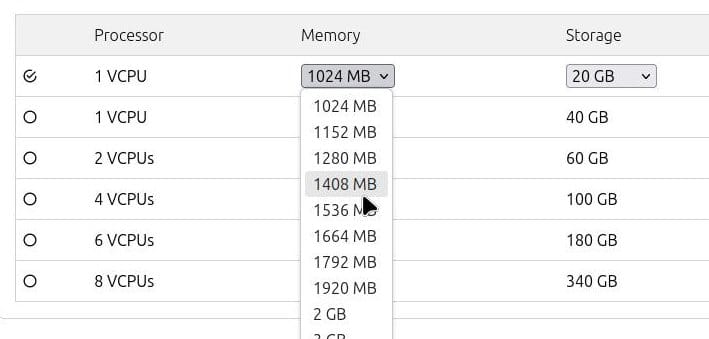
For example, imagine a web application running on a server with 4 GB of RAM and two CPU cores. If performance starts to suffer, the server could be upgraded to 16 GB of RAM and eight CPU cores. The application remains on a single machine, but that machine now has more resources available.
A useful analogy is upgrading a family car to a larger vehicle. The vehicle can carry more passengers and luggage, but it is still a single vehicle.
Many organisations choose vertical scaling because it is straightforward. In many cases, increasing or upgrading the server resources can be done quickly and with minimal changes to the application itself.
However, vertical scaling has limitations. Every server has a maximum amount of memory, processing power, and storage that can be installed. Eventually, there comes a point where upgrading further is either impossible or prohibitively expensive.
Understanding Horizontal Scaling
Horizontal scaling, often called scaling out, takes a different approach. Instead of making one server larger, additional servers are added to share the workload.
Consider an online store experiencing heavy traffic during a major sale. Rather than upgrading a single server, the company might deploy several web servers behind a load balancer. Incoming requests are distributed across all available servers, allowing the system to handle far more traffic than a single machine could manage.

A useful analogy is adding more checkout operators at a supermarket. Rather than asking one cashier to work faster, the workload is distributed among multiple people.
This approach allows systems to continue growing by adding more servers as demand increases. It also improves resilience because if one server fails, the remaining servers can continue operating.
The trade-off is complexity. Multiple servers require additional components and careful planning. Tasks such as load balancing, synchronising data, and monitoring infrastructure become more important as systems grow.
Comparing the Two Approaches
The main difference between vertical and horizontal scaling is where the additional capacity comes from.
With vertical scaling, capacity is increased by upgrading a single server. With horizontal scaling, capacity is increased by adding more servers.
Vertical scaling is generally simpler to implement and manage. For smaller applications and growing businesses, it is often the first solution considered because it can provide immediate performance improvements without major architectural changes.
Horizontal scaling is typically more suitable for large systems that require high availability and the ability to handle significant growth. Many modern cloud-native applications are designed with horizontal scaling in mind because it provides greater flexibility over the long term both expanding as demand increases and decreasing during quieter times to save costs.
When Should You Use Vertical Scaling?
Vertical scaling is often a good choice when:
- The application is relatively small.
- Growth is still predictable.
- Simplicity is a priority.
- Additional server resources are readily available.
For many websites, internal business applications, and small SaaS platforms, vertical scaling can support growth for quite some time before alternative approaches need to be considered.
When Should You Use Horizontal Scaling?
Horizontal scaling becomes attractive when:
- A single server is approaching its limits and cannot be realistically upgraded any further
- High availability is important.
- Downtime must be minimised.
- Workloads fluctuate significantly.
- Long-term growth is expected.
Large online services, streaming platforms, and cloud applications frequently rely on horizontal scaling because it allows them to continue expanding without being constrained by the capabilities of a single machine.
Advantages and Disadvantages
Vertical Scaling
Advantages
- Simple to implement
- Easier to manage
- Requires minimal application changes
- Often provides quick performance improvements
Disadvantages
- Limited by hardware constraints
- Creates a potential single point of failure
- High-end hardware can become expensive
- Future growth may be restricted
Horizontal Scaling
Advantages
- Supports significant growth
- Improves fault tolerance
- Reduces reliance on a single server
- Works well in cloud environments
Disadvantages
- More complex to design and maintain
- May require application changes
- Introduces additional infrastructure components
- Can increase operational overhead
Conclusion
There is no universal answer to the question of whether vertical or horizontal scaling is better. The right choice depends on the needs of the application, the expected growth, and the resources available.
In practice, many organisations begin with vertical scaling because it is simple and cost-effective. As systems grow and requirements become more demanding, horizontal scaling is often introduced to improve resilience and support further expansion.
Understanding the strengths and limitations of both approaches is an important step towards designing systems that can continue to perform well as demand increases.